
Preface
It is time for open-loopOpen-loop ticketing allows fare payments with Visa, Mastercard, etc. cards. UniTiAg unlocks non-card-based open-loop ticketing tools, e.g., direct banking, e-wallets, crypto, etc. More ticketing to shift from using contactless bank cards (in any form factor) as the means of rider identification and card-presentCard-present transaction means that the card is physically engaged with a point of sale device during the transaction. More payments for transportation. It is time to embrace smartphones and wearables with authentication methods that are completely free of PCI DSSPayment Card Industry Data Security Standards. scope and the card-presentCard-present transaction means that the card is physically engaged with a point of sale device during the transaction. More transaction regulations imposed by payment schemes.
This evolution is driven by two undeniable realities: global smartphone ubiquity and the dominance of social platforms like Telegram.
UniTiAgUniversal Ticketing Agent is a model of open-loop public transit ticketing using card-not-present transactions for fare acquiring. More is currently the only open-loopOpen-loop ticketing allows fare payments with Visa, Mastercard, etc. cards. UniTiAg unlocks non-card-based open-loop ticketing tools, e.g., direct banking, e-wallets, crypto, etc. More model that fully aligns with this paradigm. We invite ticketing vendors, their customers—transit operators—and online marketplaces to brainstorm this approach with us and start piloting. Let’s make Open LoopOpen-loop ticketing allows fare payments with Visa, Mastercard, etc. cards. UniTiAg unlocks non-card-based open-loop ticketing tools, e.g., direct banking, e-wallets, crypto, etc. More affordable for even small cities and convenient for their people.
Want to see the future of ticketing in action? Use our @RideOntonBot to get a gist of how this works, and read this post.
Three UniTiAg Metamorphoses
Since its foundation, UniTiAg, an Open-LoopOpen-loop ticketing allows fare payments with Visa, Mastercard, etc. cards. UniTiAg unlocks non-card-based open-loop ticketing tools, e.g., direct banking, e-wallets, crypto, etc. More ticketing service, model, and approach, has gone through three major metamorphoses.
First Metamorphose: Beyond Card-Present Transactions

We shifted from Card-PresentCard-present transaction means that the card is physically engaged with a point of sale device during the transaction. More cEMVContactless EMV More transactions at transit validatorsValidator is a device with contactless card reader, registering card taps and validating access to the transit services. It is not a point of sale in UniTiAg model. More to Card-Not-PresentCard-not-present transaction means that the card is not physically engaged with a point of sale device during the transaction. Used in e-commerce. More (CNPCard-not-present transaction means that the card is not physically engaged with a point of sale device during the transaction. Used in e-commerce. More) transactions at online Two-Sided MarketplacesAn online marketplace comprising two categories of customers: (A) online shoppers—e-wallet holders with cards or cash, and service receivers; (B) online merchants, sellers, and service providers. Examples include Amazon, Walmart, Uber, and many others. More (TSMPAn online marketplace comprising two categories of customers: (A) online shoppers—e-wallet holders with cards or cash, and service receivers; (B) online merchants, sellers, and service providers. Examples include Amazon, Walmart, Uber, and many others. More). The TSMPsAn online marketplace comprising two categories of customers: (A) online shoppers—e-wallet holders with cards or cash, and service receivers; (B) online merchants, sellers, and service providers. Examples include Amazon, Walmart, Uber, and many others. More charge transit riders for refilling their OTRBsOpen-to-Ride Balance is an e-wallet monetary value for ticketing purposes, associated with a contactless token, shared between Transit Agencies. It can be pre-authorized, prepaid, postpaid, or a combination of thereof. More and reconcile Transit Agencies (TAsA transit operator or an agency representing several transit operators. In our model, the TA is a seller of their services on an online marketplace. More) for the rides they have provided (not for sold tickets).
Second Metamorphose: Beyond the cEMV PAN

We introduced the Contactless Rider DeviceContactless Rider Device that presents credentials to the Validator proving the rider’s right to access transit services, e.g. cEMV card, a smartphone, etc. More Token (CRDContactless Rider Device that presents credentials to the Validator proving the rider’s right to access transit services, e.g. cEMV card, a smartphone, etc. More Token) as an anonymous alternative to the cEMVContactless EMV More card number (PAN), linked to the OTRBOpen-to-Ride Balance is an e-wallet monetary value for ticketing purposes, associated with a contactless token, shared between Transit Agencies. It can be pre-authorized, prepaid, postpaid, or a combination of thereof. More.
In our previous post “Redefining Open LoopOpen-loop ticketing allows fare payments with Visa, Mastercard, etc. cards. UniTiAg unlocks non-card-based open-loop ticketing tools, e.g., direct banking, e-wallets, crypto, etc. More in Transit Ticketing with UWBUltra-Wideband is a short-range wireless communication technology that uses a wide frequency bandwidth (typically >500 MHz) to transmit data. More and Wallets” we used Ultra-wide Band (UWBUltra-Wideband is a short-range wireless communication technology that uses a wide frequency bandwidth (typically >500 MHz) to transmit data. More) as an example and opportunity to build Open-LoopOpen-loop ticketing allows fare payments with Visa, Mastercard, etc. cards. UniTiAg unlocks non-card-based open-loop ticketing tools, e.g., direct banking, e-wallets, crypto, etc. More ticketing free of Payment Card Industry (PCI) regulatory burden.
However, we still considered payment cards—in any form factor—an important component of the UniTiAgUniversal Ticketing Agent is a model of open-loop public transit ticketing using card-not-present transactions for fare acquiring. More open-loopOpen-loop ticketing allows fare payments with Visa, Mastercard, etc. cards. UniTiAg unlocks non-card-based open-loop ticketing tools, e.g., direct banking, e-wallets, crypto, etc. More model due to the apparent lack of an alternative, ubiquitous physical carrier for identification tokens.
Third Metamorphose: Beyond the Traveler’s Plastic

Telegram *), a global social platform and communication network, introduced so-called Mini Apps in April 2022. This allows Telegram users to buy or sell services without ever leaving the main Telegram App.
Considering that Telegram now boasts over 950 million monthly active users worldwide (as of 2024)—with 500 million specifically using Mini Apps—this ecosystem becomes a critical factor for transit agencies. This aligns perfectly with the reality of Open LoopOpen-loop ticketing allows fare payments with Visa, Mastercard, etc. cards. UniTiAg unlocks non-card-based open-loop ticketing tools, e.g., direct banking, e-wallets, crypto, etc. More: the overwhelming majority of occasional riders and tourists, who benefit most from friction-free ticketing, are already equipped with smartphones for connectivity and navigation. It is time to consider reshaping the open-loopOpen-loop ticketing allows fare payments with Visa, Mastercard, etc. cards. UniTiAg unlocks non-card-based open-loop ticketing tools, e.g., direct banking, e-wallets, crypto, etc. More approach to totally and forever remove the PCI compliance scope related to card readers, validatorsValidator is a device with contactless card reader, registering card taps and validating access to the transit services. It is not a point of sale in UniTiAg model. More, and ticketing system services.
No doubt, other social platforms will follow suit. The shift toward the ‘Super App’ model—where messaging meets marketplace—is an unstoppable global tide. While Telegram is currently the pioneer in our target markets, the other tech giants will inevitably catch up. UniTiAgUniversal Ticketing Agent is a model of open-loop public transit ticketing using card-not-present transactions for fare acquiring. More is built to be ready for them. We are positioned to extend our open-loopOpen-loop ticketing allows fare payments with Visa, Mastercard, etc. cards. UniTiAg unlocks non-card-based open-loop ticketing tools, e.g., direct banking, e-wallets, crypto, etc. More model to these new platforms as they emerge, ensuring that transit agencies aren’t locked into a single ecosystem, but are future-proofed for the next generation of digital interaction.
Try our Telegram Mini App @RideOntonBot and read the rest of this post.
As of Dec 2025, UniTiAgUniversal Ticketing Agent is a model of open-loop public transit ticketing using card-not-present transactions for fare acquiring. More Embraces Telegram ® WebApp Platform
*) We are not implying any form of official engagement with Telegram as a legal entity. Universal Ticketing AgentUniversal Ticketing Agent is a model of open-loop public transit ticketing using card-not-present transactions for fare acquiring. More (UniTiAgUniversal Ticketing Agent is a model of open-loop public transit ticketing using card-not-present transactions for fare acquiring. More) solely uses the Telegram Mini App platform (technically known as Telegram Web Apps), which is an open platform available to developers worldwide.
Main Components of UniTiAg Open-Loop Ticketing Model
UniTiAg
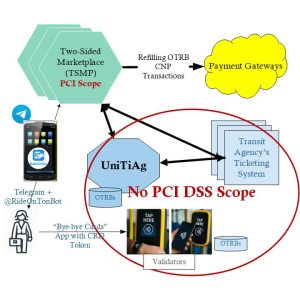
Universal Ticketing AgentUniversal Ticketing Agent is a model of open-loop public transit ticketing using card-not-present transactions for fare acquiring. More (UniTiAgUniversal Ticketing Agent is a model of open-loop public transit ticketing using card-not-present transactions for fare acquiring. More) is a cloud-based service that makes Open-LoopOpen-loop ticketing allows fare payments with Visa, Mastercard, etc. cards. UniTiAg unlocks non-card-based open-loop ticketing tools, e.g., direct banking, e-wallets, crypto, etc. More ticketing affordable. Remarkably, the transit riders do not know anything about its existence, and we are not talking about it here anymore. Business Development and IT personnel of Transit Agencies (TAsA transit operator or an agency representing several transit operators. In our model, the TA is a seller of their services on an online marketplace. More), ticketing system vendors, and Two-Sided MarketplacesAn online marketplace comprising two categories of customers: (A) online shoppers—e-wallet holders with cards or cash, and service receivers; (B) online merchants, sellers, and service providers. Examples include Amazon, Walmart, Uber, and many others. More (TSMPsAn online marketplace comprising two categories of customers: (A) online shoppers—e-wallet holders with cards or cash, and service receivers; (B) online merchants, sellers, and service providers. Examples include Amazon, Walmart, Uber, and many others. More) can refer to https://unitiag.com/ for detailed information and APIApplication Programming Interface More documentation.
TSMPs
The TSMPsAn online marketplace comprising two categories of customers: (A) online shoppers—e-wallet holders with cards or cash, and service receivers; (B) online merchants, sellers, and service providers. Examples include Amazon, Walmart, Uber, and many others. More are virtual spaces where:
- Buyers are transit riders who refill their money value Open-To-Ride Balances (OTRBsOpen-to-Ride Balance is an e-wallet monetary value for ticketing purposes, associated with a contactless token, shared between Transit Agencies. It can be pre-authorized, prepaid, postpaid, or a combination of thereof. More).
- Sellers are Transit Agencies which get paid for the services they provide. The TAsA transit operator or an agency representing several transit operators. In our model, the TA is a seller of their services on an online marketplace. More are not selling tickets; they strictly provide services, and the TSMPAn online marketplace comprising two categories of customers: (A) online shoppers—e-wallet holders with cards or cash, and service receivers; (B) online merchants, sellers, and service providers. Examples include Amazon, Walmart, Uber, and many others. More reconciles them after the fact.
The TSMPAn online marketplace comprising two categories of customers: (A) online shoppers—e-wallet holders with cards or cash, and service receivers; (B) online merchants, sellers, and service providers. Examples include Amazon, Walmart, Uber, and many others. More can be any marketplace that sells OTRBOpen-to-Ride Balance is an e-wallet monetary value for ticketing purposes, associated with a contactless token, shared between Transit Agencies. It can be pre-authorized, prepaid, postpaid, or a combination of thereof. More refills, charging via any possible payment method—cards, crypto wallets, fiat wallets, etc.—through their payment gateways. There may be many participating marketplaces, including Telegram itself, as Telegram supports native payments.
CRD and CRD Token
The Contactless Rider DeviceContactless Rider Device that presents credentials to the Validator proving the rider’s right to access transit services, e.g. cEMV card, a smartphone, etc. More (CRDContactless Rider Device that presents credentials to the Validator proving the rider’s right to access transit services, e.g. cEMV card, a smartphone, etc. More) is a smartphone or a wearable that presents a so-called CRDContactless Rider Device that presents credentials to the Validator proving the rider’s right to access transit services, e.g. cEMV card, a smartphone, etc. More Token to transit validatorsValidator is a device with contactless card reader, registering card taps and validating access to the transit services. It is not a point of sale in UniTiAg model. More. The CRDContactless Rider Device that presents credentials to the Validator proving the rider’s right to access transit services, e.g. cEMV card, a smartphone, etc. More Token can be presented via any communication channel supported by the validatorsValidator is a device with contactless card reader, registering card taps and validating access to the transit services. It is not a point of sale in UniTiAg model. More (e.g., NFCNear-Field Communications, a protocol used for data exchange between contactless cards and readers. More, UWBUltra-Wideband is a short-range wireless communication technology that uses a wide frequency bandwidth (typically >500 MHz) to transmit data. More, BT, Wireless, Optical/QR).
The CRDContactless Rider Device that presents credentials to the Validator proving the rider’s right to access transit services, e.g. cEMV card, a smartphone, etc. More Token is totally free of any payment or personal information. Consequently, TAsA transit operator or an agency representing several transit operators. In our model, the TA is a seller of their services on an online marketplace. More and their ticketing system vendors implementing Open LoopOpen-loop ticketing allows fare payments with Visa, Mastercard, etc. cards. UniTiAg unlocks non-card-based open-loop ticketing tools, e.g., direct banking, e-wallets, crypto, etc. More do not need to spend capital and operational resources achieving PCI DSSPayment Card Industry Data Security Standards. or GDPR compliance regarding the tap itself.
The transit operators deal with CRDContactless Rider Device that presents credentials to the Validator proving the rider’s right to access transit services, e.g. cEMV card, a smartphone, etc. More Tokens, whereas the TSMPsAn online marketplace comprising two categories of customers: (A) online shoppers—e-wallet holders with cards or cash, and service receivers; (B) online merchants, sellers, and service providers. Examples include Amazon, Walmart, Uber, and many others. More deal with Open-To-Ride Balances linked to those tokens via the UniTiAgUniversal Ticketing Agent is a model of open-loop public transit ticketing using card-not-present transactions for fare acquiring. More cloud. The TSMPsAn online marketplace comprising two categories of customers: (A) online shoppers—e-wallet holders with cards or cash, and service receivers; (B) online merchants, sellers, and service providers. Examples include Amazon, Walmart, Uber, and many others. More handle payment methods and gateways when they refill or refund OTRBsOpen-to-Ride Balance is an e-wallet monetary value for ticketing purposes, associated with a contactless token, shared between Transit Agencies. It can be pre-authorized, prepaid, postpaid, or a combination of thereof. More. This is where CNPCard-not-present transaction means that the card is not physically engaged with a point of sale device during the transaction. Used in e-commerce. More transactions are utilized, along with wallets and crypto, and where sensitive personal and payment information must be protected.
Telegram Mini App
For a better understanding of the narration below, just try our Telegram Mini App @RideOntonBot.
Telegram provides Mini Apps with payment capability via multiple payment gateways, not limited to credit/debit cards or fiat currency.
Cryptocurrencies and stablecoins are integrated payment methods that Telegram users can utilize. Telegram features its “native” TON cryptocurrency, which many users may find attractive for transit payments (TAsA transit operator or an agency representing several transit operators. In our model, the TA is a seller of their services on an online marketplace. More, of course, are reconciled in their native fiat currencies).
@RideOntonBot currently works for demonstration purposes. It communicates with our demo TSMPAn online marketplace comprising two categories of customers: (A) online shoppers—e-wallet holders with cards or cash, and service receivers; (B) online merchants, sellers, and service providers. Examples include Amazon, Walmart, Uber, and many others. More, AmuzeBuy The latter has an option for user login via Telegram.
@RideOntonBot can be integrated with any TSMPAn online marketplace comprising two categories of customers: (A) online shoppers—e-wallet holders with cards or cash, and service receivers; (B) online merchants, sellers, and service providers. Examples include Amazon, Walmart, Uber, and many others. More that wants to support the OTRBOpen-to-Ride Balance is an e-wallet monetary value for ticketing purposes, associated with a contactless token, shared between Transit Agencies. It can be pre-authorized, prepaid, postpaid, or a combination of thereof. More and implement UniTiAg’s TSMPAn online marketplace comprising two categories of customers: (A) online shoppers—e-wallet holders with cards or cash, and service receivers; (B) online merchants, sellers, and service providers. Examples include Amazon, Walmart, Uber, and many others. More APIApplication Programming Interface More.
Android App “Bye-Bye Cards”
Our Android app “Bye-Bye Cards” ( you can get it from Google Play Store here ) works in tandem with @RideOntonBot. Because the Telegram platform does not allow its Mini Apps to access certain smartphone hardware resources (like the NFCNear-Field Communications, a protocol used for data exchange between contactless cards and readers. More controller) directly, this app works on the rider’s device as a bridge between @RideOntonBot and the transit validatorsValidator is a device with contactless card reader, registering card taps and validating access to the transit services. It is not a point of sale in UniTiAg model. More. The app presents the CRDContactless Rider Device that presents credentials to the Validator proving the rider’s right to access transit services, e.g. cEMV card, a smartphone, etc. More Token linked to the rider’s OTRBOpen-to-Ride Balance is an e-wallet monetary value for ticketing purposes, associated with a contactless token, shared between Transit Agencies. It can be pre-authorized, prepaid, postpaid, or a combination of thereof. More to the validatorValidator is a device with contactless card reader, registering card taps and validating access to the transit services. It is not a point of sale in UniTiAg model. More and proves that the CRDContactless Rider Device that presents credentials to the Validator proving the rider’s right to access transit services, e.g. cEMV card, a smartphone, etc. More Token is genuine.
We created this app-bridge—currently—only for Android. Feel free to download it and try it with @RideOntonBot. It works in a demo version as we discuss integration options with TAsA transit operator or an agency representing several transit operators. In our model, the TA is a seller of their services on an online marketplace. More and their ticketing system vendors.
Please note that the app does not store the OTRB’s currency or balance. The actual OTRBOpen-to-Ride Balance is an e-wallet monetary value for ticketing purposes, associated with a contactless token, shared between Transit Agencies. It can be pre-authorized, prepaid, postpaid, or a combination of thereof. More value is managed via the UniTiAgUniversal Ticketing Agent is a model of open-loop public transit ticketing using card-not-present transactions for fare acquiring. More cloud. This ensures business interoperability necessary for Open LoopOpen-loop ticketing allows fare payments with Visa, Mastercard, etc. cards. UniTiAg unlocks non-card-based open-loop ticketing tools, e.g., direct banking, e-wallets, crypto, etc. More. Giving access to a particular balance segment in the CRDContactless Rider Device that presents credentials to the Validator proving the rider’s right to access transit services, e.g. cEMV card, a smartphone, etc. More memory to all TAsA transit operator or an agency representing several transit operators. In our model, the TA is a seller of their services on an online marketplace. More would require creating and supporting a “trusted environment” on the technological and financial levels across all validatorsValidator is a device with contactless card reader, registering card taps and validating access to the transit services. It is not a point of sale in UniTiAg model. More, all TSMPsAn online marketplace comprising two categories of customers: (A) online shoppers—e-wallet holders with cards or cash, and service receivers; (B) online merchants, sellers, and service providers. Examples include Amazon, Walmart, Uber, and many others. More, and all wallets (Apple, Google, etc.). This would necessitate complex legal relationships and an asymmetric (public) key hierarchy across all participants, slowing down authentication and increasing costs, let along, creating a global settlement system between all TAsA transit operator or an agency representing several transit operators. In our model, the TA is a seller of their services on an online marketplace. More.
There are the following integration options to avoid complex development on the validatorValidator is a device with contactless card reader, registering card taps and validating access to the transit services. It is not a point of sale in UniTiAg model. More side:
- cEMV-like NFCNear-Field Communications, a protocol used for data exchange between contactless cards and readers. More: The CRDContactless Rider Device that presents credentials to the Validator proving the rider’s right to access transit services, e.g. cEMV card, a smartphone, etc. More Token replaces the cEMVContactless EMV More card PAN. The CRDContactless Rider Device that presents credentials to the Validator proving the rider’s right to access transit services, e.g. cEMV card, a smartphone, etc. More is authenticated offline. More about Bye-Bye Cards and its cEMV session trace is here.
- Timestamped QR Code: An offline CRDContactless Rider Device that presents credentials to the Validator proving the rider’s right to access transit services, e.g. cEMV card, a smartphone, etc. More Token authentication supported by UniTiAgUniversal Ticketing Agent is a model of open-loop public transit ticketing using card-not-present transactions for fare acquiring. More, where the UniTiAgUniversal Ticketing Agent is a model of open-loop public transit ticketing using card-not-present transactions for fare acquiring. More OTRBOpen-to-Ride Balance is an e-wallet monetary value for ticketing purposes, associated with a contactless token, shared between Transit Agencies. It can be pre-authorized, prepaid, postpaid, or a combination of thereof. More object comprises the CRDContactless Rider Device that presents credentials to the Validator proving the rider’s right to access transit services, e.g. cEMV card, a smartphone, etc. More Token PKIPublic Key Infrastructure is a framework of cryptographic technologies, policies, and services that enables secure authentication by managing digital certificates and public-private key pairs. More Certificate issued by the TSMPAn online marketplace comprising two categories of customers: (A) online shoppers—e-wallet holders with cards or cash, and service receivers; (B) online merchants, sellers, and service providers. Examples include Amazon, Walmart, Uber, and many others. More. The app rotates the QR code with a signed timestamp to prevent replay attacks.
- Calypso-like NFCNear-Field Communications, a protocol used for data exchange between contactless cards and readers. More: Utilizing the Calypso Prime PKIPublic Key Infrastructure is a framework of cryptographic technologies, policies, and services that enables secure authentication by managing digital certificates and public-private key pairs. More specification. This supports asymmetric cryptography for offline CRDContactless Rider Device that presents credentials to the Validator proving the rider’s right to access transit services, e.g. cEMV card, a smartphone, etc. More Token authentication without requiring SAMs in every reader.
- Google Wallet Deep Link: A generic “Transit” pass in Google Wallet containing appLinkData. When tapped, this deep link instantly launches the “Bye-Bye Cards” app and enables reader mode, allowing the HCE transaction to proceed.
- UWBUltra-Wideband is a short-range wireless communication technology that uses a wide frequency bandwidth (typically >500 MHz) to transmit data. More: As discussed in our previous post, the UWBUltra-Wideband is a short-range wireless communication technology that uses a wide frequency bandwidth (typically >500 MHz) to transmit data. More option can be implemented for hands-free access.
- Wearables. As the CRDContactless Rider Device that presents credentials to the Validator proving the rider’s right to access transit services, e.g. cEMV card, a smartphone, etc. More Token does not comprise any secret data, the interface between the smartwatch and the smartphone can be simplified, and neither device needs to be PCI compliant (specifically avoiding the burden of PCI DSSPayment Card Industry Data Security Standards. and PCI PTS standards). The private key associated with the CRDContactless Rider Device that presents credentials to the Validator proving the rider’s right to access transit services, e.g. cEMV card, a smartphone, etc. More Token for authentication can be stored in the watch’s secure element or the smartphone’s secure element. In the latter case, the smartphone periodically loads short-living signed CRDContactless Rider Device that presents credentials to the Validator proving the rider’s right to access transit services, e.g. cEMV card, a smartphone, etc. More Token timestamps to the watch (via Bluetooth), allowing the smartwatch to remain functionally simple.
Unbanked and Underbanked Riders
While travelers will enjoy Open-LoopOpen-loop ticketing allows fare payments with Visa, Mastercard, etc. cards. UniTiAg unlocks non-card-based open-loop ticketing tools, e.g., direct banking, e-wallets, crypto, etc. More using their phones and watches, the unbanked (cash only)and underbanked riders will continue using your closed-loopClosed-loop ticketing systems use their specific cards incompatible with other transit systems. More ticketing component. However, you can outsource the payment processing for their account refills to a TSMPAn online marketplace comprising two categories of customers: (A) online shoppers—e-wallet holders with cards or cash, and service receivers; (B) online merchants, sellers, and service providers. Examples include Amazon, Walmart, Uber, and many others. More. This allows you to maintain the closed-loopClosed-loop ticketing systems use their specific cards incompatible with other transit systems. More service they rely on, while still getting rid of your PCI DSSPayment Card Industry Data Security Standards. compliance scope for any Card-Not-PresentCard-not-present transaction means that the card is not physically engaged with a point of sale device during the transaction. Used in e-commerce. More transactions used to top them up.
User Experience
- Rider opens @RideOntonBot inside Telegram.
- Chooses amount → pays with any method the marketplace (TSMPAn online marketplace comprising two categories of customers: (A) online shoppers—e-wallet holders with cards or cash, and service receivers; (B) online merchants, sellers, and service providers. Examples include Amazon, Walmart, Uber, and many others. More) supports (crypto, bank transfer, card, cash — doesn’t matter).
- Creates an OTRBOpen-to-Ride Balance is an e-wallet monetary value for ticketing purposes, associated with a contactless token, shared between Transit Agencies. It can be pre-authorized, prepaid, postpaid, or a combination of thereof. More.
- Taps “Open in Bye-Bye Cards” → Android app opens.
- One confirmation → 15-byte CRDContactless Rider Device that presents credentials to the Validator proving the rider’s right to access transit services, e.g. cEMV card, a smartphone, etc. More Token is written to the CRDContactless Rider Device that presents credentials to the Validator proving the rider’s right to access transit services, e.g. cEMV card, a smartphone, etc. More.
- From that moment the phone/watch is a real transit pass — completely offline.
Try it yourself — it already works today. Everything is running in public demo mode right now.
Supporting Materials
Eclipse Keyple
Since April 2024, Keyple supports sessions secured by public key cryptography on Calypso Prime PKIPublic Key Infrastructure is a framework of cryptographic technologies, policies, and services that enables secure authentication by managing digital certificates and public-private key pairs. More cards. This enables strong authentication of both the card and the data read from it, without necessarily requiring a Secure Access Module.
Telegram
Telegram Usage Statistics. July 2024. “More than 500 million out of Telegram’s 950 million users interact with mini apps every month.”
Other Platforms:
- X (former Twitter): “Superapp X to be a better WeChat outside China: Elon Musk”. The Economic Times (citing Musk’s direct statements from a podcast), December 1, 2025. “I also like the idea of having a unified app or website… where you can do anything you want there. You know, China has this with WeChat… So, it’s kind of WeChat++, I’d say, is the idea for X.”
- Meta (WhatsApp). “Meta Positioning WhatsApp To Be a Super App” – TechNewsWorld, July 2025.
Copyrights
© 2025 Lifecycle Integrity Inc. & Eugene Lishak
#ByeByeCards #UniTiAgUniversal Ticketing Agent is a model of open-loop public transit ticketing using card-not-present transactions for fare acquiring. More #OpenLoop #TelegramMiniApp #RideOnTon